Thursday, August 13, 2009

It's Not Surrender

My abuser was an evangelical minister. God, prayer, heaven, and hell were all an integral part of the sexual exploitation perpetrated against me. That connection between abuse and God placed a very deep wedge between me and God for many years. In fact, I spent a substantial part of my youth wanting absolutely nothing to do with God, church, or Christianity. They were all one in the same - in my mind - with abuse and my abuser. As my mental, emotional, and spiritual state deteriorated, I soon recognized I needed something more - but to acknowledge that "something" was God was the equivalent to surrender in my mind. If I reached out to God, if I embraced Christianity - that meant my abuser and the system that my abuser belonged to . . . won! That's how it felt to me, at least.

Research done in 2006 revealed that those who had a strong history of religiosity (measured by consistent church attendance, involvement in church activities, and life-long affiliation with religious groups and practices) made up the highest percentage in a selected population of incarcerated sex offenders. In other words, strong religious ties often translate into a higher likelihood of sexual offenses and other forms of abuse against children. The other disturbing part of this study revealed that this same group also perpetrated against younger children than the other sex offenders who described themselves as atheists or recent converts.

What this means to many abuse survivors is that their abusers were also deeply involved in religious community and spiritual practices. This effectively obstructs your own spiritual pursuits and creates enormous barriers to finding peace through sacred practices - such as prayer, communion, church attendance, or Bible study. In fact, for many abuse survivors, these practices, icons, and symbols bring terror, anxiety, and repulsion because of their association with abuse.

Your spiritual journey beyond abuse must include growing beyond your abusers' defilement of faith, religious community and practices. Your resistance to God's gentle work in your life may have more to do with fear of alliance with your abuser than an actual struggle with faith. What you must understand is that even if you pray the same prayers, read the same Scriptures, attend the same church, believe the same doctrines as your abuser - that has nothing to do with your abuser.

Your faith is YOURS. No one who abused you is the "winner" if the faith you find hope, strength, and comfort in looks and sounds like theirs. The spiritual quest you are on belongs to you and you alone! Even if you abusers smugly take credit for your faith-walk and have the audacity to continue maligning it with their persistent insistence that you are "returning to their fold" - you are not!

To pursue God, to follow Christ, to pray, meditate, sing, fellowship, worship, study, or genuflect in the same ways your abusers did (or do) is NOT - I repeat, NOT - surrender to them in any way, shape, or form! This is YOURS. You must embrace that idea with total confidence. Your path to walk. Your faith to believe. Your rituals to find comfort in. Your prayers to pray. Your songs to sing. Your faith community to belong to. Not theirs - YOURS.

It is not surrender. It is a declarative alliance with the God of comfort, hope, grace, mercy, and love. It is to latch on to the "I am" from the Hebrew Bible and the "I am" from the teachings of Jesus (Exodus 3:14; John 8:58) and join your voice with that identity. To hear yourself say, "I am" and know that has NOTHING to do with your abusers' perversion and EVERYTHING to do with your pure heart that is on a spiritual quest.

It's not surrender. It's conquest – and you are the conqueror.

Thursday, August 6, 2009

Angst Fast

Let me begin this by saying that I have spent most of my life addicted to angst. Glorying in negativity. Reveling in what's wrong. One of my greatest struggles was to come to terms with the fact that I honestly wasn't sure I wanted to become healthier. My true rhythm was found in the familiarity of damage and dysfunction. Self-sabotage and depression. I'm not proud to admit this, but I suspect I'm not the only one.

This worldview is understandable. After all, it's easier to expect the worst and not be disappointed than to expect the best and have your hopes and dreams crushed. Abuse is an effective teacher in that sense. When you've experienced exploitation and mistreatment, you come to believe that all the world's a prison and everyone is suspect - even those you love. Like I said - abuse is an effective teacher.

But what would happen if you shifted that worldview? What would happen if you became a positive person instead of a negative one? Please understand - I'm writing this article mainly for myself! I'm asking MYSELF these questions. But it's intriguing to ponder. What would happen if you made a decision to go on an ANGST FAST? Now I'm not suggesting that you go into some kind of magic denial bubble and lose touch with reality. I AM suggesting, however, that you examine how optimistic or pessimistic you are. That you assess how toxic your words and thoughts are to you and others. That you recognize the energy you spend waiting for the other-shoe-to-drop.

I'd like to suggest an experiment for you and me. I'd like to suggest that we go on an ANGST FAST. That we deprive ourselves from negativity, cynicism, bitterness, and irritation for a set amount of time. Be reasonable with yourself. Don't start out by Angst Fasting for a day - start with an hour - or even fifteen minutes! If you've spent your whole life drowning in angst, dysfunction, and bitter depression - you can't go "cold turkey" (or at least most of us can't go cold turkey!). You need to slowly de-tox and celebrate the little successes - be it five minutes or five hours or five days.

For example, this morning I woke up to a full day's schedule, a shortage of funds and energy, and a pounding sinus headache. I found that my "self-talk" was very negative. "I can't do it all! I don't have enough money or energy! My head is killing me - of course!" The negativity was so loud that it started to spill over in how I treated other people. I was irritable and inpatient. It was the perfect cocktail for a disastrous day. So I experimented with this idea of Angst Fast and decided that for the next five minutes, I was going to look at the same picture in a celebratory way. So here's how that translated:"I have some big dreams and visions that are challenging! I can do some things better than others, but I do not have to do it all. I have a headache and need to pay attention to it - so I'll take some sinus headache medicine and lay down if I can. If I am unable to lie down, then I'll try to slow down." Just this tweaking from negative to positive changed how those five minutes worked for me and those around me. Actually, it empowered me.

So here's the challenge: Go on an ANGST FAST! When you find yourself slipping back into the self-wallowing angst you are so familiar with, then simply regroup, take a breath, and give it another try. Don't beat yourself up - just start again. The old Alcoholics Anonymous saying is very appropriate here: "One day at a time." Break it down however you need to - but make a decision to fast from negativity for a few moments. That will grow to a few hours, then days, weeks, months, and years. Who knows, you may Angst Fast for the rest of your life!


Upcoming Seminar:

October 3, 2009 - Beyond Abuse Seminar. Cornerstone Assembly of God. Oxford, CN (USA)

203-881-3232 www.cornerstonect.org

Thursday, July 30, 2009

Family Redefined

Family. The word is meant to invoke feelings of warmth, inclusion, safety, and trust. For you, it may mean anything but that.

Do you find yourself grieving for a family you will never have? Do you find yourself so angry because of the toxic events and relationships in your life, that you have no positive expectations about what a family is meant to be?

Jesus recognized that those who are in your trust circle, who are your community or your family, are not necessarily the ones that fulfill your deep longings for warmth, inclusion, and safety. He taught that when your own family feels like strangers, you can find another family (Matthew 12:46-50), a family of choice. Jesus explained the possibility of making choices to find a new community based on the common bonds of faith and shared dreams.

In this second family, a family of choice, there is another opportunity to experience what your heart has always longed for. Inclusion, safety, and trust. Create - creatively create - another family if the one you have has broken your heart.

Thursday, July 23, 2009

Normal

Do you ever have that nagging sense that you don't quite fit? That everyone else but you knows what to do, how to interact with others, how to think and feel? I often wondered if there wasn't a neon sign on my forehead that broadcast to the world, "alien life-form, doesn't belong."

A history of childhood abuse leaves many people with these sensations. Because these experiences happen while you're forming ideas about yourself, others, and God - how you interact with life is deeply impacted. Your "normal" was shaped by the abnormal and destructive experiences of abuse. You responded, reacted, coped, and suffered through abuse - an abnormality that no child should have to go through. Even if everyone in your family and neighborhood experienced abuse, there is nothing normal about that. That's not what a child should expect from life - although it is the reality of many children and vulnerable people.

Children learn how to live and behave by imitating others. If those in your world were either abusive, unavailable, or passively responsible - you had models that gave you abnormal examples of how to live. You learned to expect dysfunction, broken trust, exploitation, terror, and stress. That became your "normal."

If these experiences and reactions are your normal - as you grow into an adult, these expectations and reactions grow too. It can create a nagging sense of not being normal, which can last throughout adolescence and well into adulthood. This can exaggerate isolation, fear of rejection, and expectations of being hurt.

As with every other aspect of abuse recovery, awareness is everything. Your discomfort is a substantial obstacle - but you must recognize that it is obvious mostly to you. Others really have no way to know how awkward you feel, how unwelcome you think you are, how untrusting you are, or how abnormal you feel.

Remind yourself of this. If you're not certain what a normal response is, watch how others seem to do so and evaluate if that is appropriate for you and for the situation. Take some time to sift through various aspects of your uncertainty so that you can make better choices. Recognize that you have just as much of a right to live and function as the next person. Don't expect others to give that to you - it's something for you to claim as your own and function in, accordingly.

You are normal - how you coped and responded during the abuse - normal. Normal - just like everyone else who has ever been abused. How you grew your thoughts, emotions, and behaviors after abuse is also normal - under the circumstances. The challenge for you is to make sure that your "normal" is also appropriate and constructive for you and others. “Harm none” - is a way of life that can help to guide you through your questions of normal versus not normal.

Thursday, July 16, 2009

Protective Adults

Every time I read about a child who is abused, I become enraged. Saddened - yes - but also enraged. How can an adult do such a thing to a child or vulnerable person? Why did that adult abuse rather than protect? Who protects that child now? Who helps that child to heal? Who nurtures and provides for that child?

These are questions that often have no good answers. The tragic reality is that most children who are abused grow up with wounds unattended, with protection non-existent, and with their foundations for living shattered.

Abused children arrive at adulthood with serious obstacles. Impaired ability to trust. Intimacy problems. Terror of abandonment. Skewed understandings of faith, spirituality, and God. Depression. Food issues. Confusion about sexuality. Rage. Addictions. Anxiety. Fear. These are just a few issues that many abuse survivors struggle with.

Studies show that children who receive immediate help after abuse is disclosed fare much better than those who don't. Children who are believed, sheltered, nurtured, and attended to can move on much better than those who don't. Sadly, most children will never disclose that abuse is taking place. Many are not believed or protected, even if they disclose. Some are even blamed for the abuse, rather than having adult advocates to step in on their behalf. These realities are what make the wounds go so deep in your mind, spirit, and body.

While the journey beyond abuse can feel formidable to an abuse survivor, it is not impossible. The journey beyond abuse leads to making healthier choices about how you live, who you are, and how you interact with both people and God. For this to happen, a fundamental experience must take place. You - the adult - must assume the role of protective, nurturing parent of yourself!

I've said this many times before, but it merits repeating. This isn't fair. The fact that you were abused. The fact that you were wounded. The fact that it's up to you to nurture yourself. None of this is fair. Take a breath. That's the reality. You can kick and scream and fight it, but it still boils down to you making healthy choices to cherish, nurture, and protect yourself. Of course, there are many layers and phases of moving beyond abuse, but at the core is YOU - deciding to treat yourself with the kindness, patience, compassion, and protection that you would offer to an abused child.

Examine how you talk to yourself. Are you kind and patient with that wounded child? Do you let that child make mistakes and then use them as growth opportunities instead of personal annihilation? Do you insist that your unhealthy inner-child eats right, sleeps enough, exercises appropriately, and plays enough? Do you remove that child from toxic people and situations that might cause further harm? Do you introduce that child to a kind and compassionate God who loves and cherishes, rather than condemns and punishes? Do you help that child to explore new relationships that are healthier and more functional? That builds up that child rather than tears down? Do you get that child the help needed? Are you an advocate for yourself?

While there is much debate about whether or not an "inner child" exists, most abuse survivors know that they have something small, terrified, and vulnerable within them that needs attention. If you aren't careful with those broken places, then you run the risk of continuing the legacy of abuse - to yourself, and possibly to other vulnerable people who must depend on you for protection and provision.

Thursday, July 9, 2009


From the Front to the Back

What's the difference between denial and moving on? For many abuse survivors, it is very common to either minimize the impact of abuse or to keep it away from their conscious memories, pretending that it never happened. Of course, whether the abuse is extremely severe or minimally severe - the damage always has an impact that can impair your ability to live in a healthy way. When you begin to unpack that damage and begin your abuse recovery, several things must take place.

1. You acknowledge that what happened, really happened.
2. You acknowledge that abuse has damaged how you think about yourself, others, and God.
3. You acknowledge that you need to find answers to help you resolve these issues.
4. You identify (at least to yourself) those who exploited, violated, and abused you. This includes not only the active abusers, but the other individuals who did not or could not protect you.

At the beginning of the abuse recovery process, things can get very intense. It stands to reason that when you awaken the ugliness of abuse, you expend enormous amounts of energy. After all, if you've spent years running, hiding, pretending, ignoring, and compensating, when you suddenly focus on all that you've been avoiding and honestly deal with it, it can completely exhaust you.

Abuse recovery, especially in the early stages, can completely occupy your thoughts. It becomes the centerpiece of how you see, feel, think, believe, and act. That's one reason that counseling is important. To have a skilled person help you with this can be stabilizing and keep you accountable during these intense phases of your journey.

In fact, this intensity is exactly why some people prematurely stop working on their recovery. It simply feels like too much. To some, it may seem easier to go back and pretend everything is normal than to face such overwhelming ugliness, pain, and damage. Of course, the problem with that is the damage doesn't go away. It will resurface with a vengeance at some point, creating more damage or pain. You can count on that.

But there is balance to all of this. Once you face these difficult experiences, memories, realities, and damage, they lose much of their power over you. The secrets are diminished, the pain is acknowledged, the issues are better understood, and the strategies are developed to live in a healthier way. In other words, abuse settles into the background of your life. It no longer takes center-stage. It is part of your history, but it does not have to dominate your future. The scars it left can be navigated around. Healthy choices can replace self-sabotage. Strategies can help you cope with difficult relationships.

The cycle of recovery is most definitely ebb and flow. You will have ups and downs. Intensity and calm. Rage and joy. Mis-steps and victories. But as you continue this journey beyond abuse, your courage to do so will mean that what was once "in your face," occupying all of your energy and vision, has settled into a corner where it will not interfere nearly as much as it used to.

Thursday, July 2, 2009

Falling Short

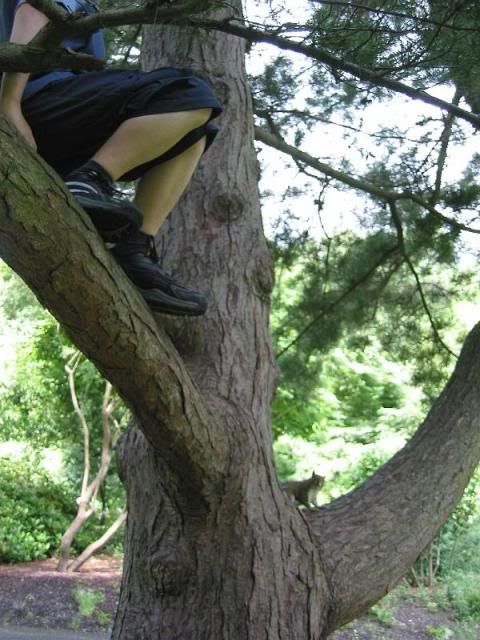
Sunday School children often sing it, "Zacchaeus! You come down!" as they wag their fingers, with hands on hips, capturing one version of Christ's words to a man who didn't quite fit in. The story is familiar to many (Luke 19:1-10). Zacchaeus, a Jewish tax collector for the Romans, made his fortune from the misery of his own people. He was evidently quite a short man, which prompted him to climb a tree one day to see and hear Jesus. He was also despised by everyone, and for good cause. He was a man full of shame and failure, isolated and desperate. So desperate, that he ran ahead of everyone else in town, climbed a tree, and . . . waited. What he was expecting, we'll never know. What he experienced, however, was acceptance, respect, and a chance to change. He took that chance and the world around him changed at once (read the story to find out how). No one else thought he deserved this chance - no one but Christ. Both Jesus and Zacchaeus took a chance, and with that risk came meaningful dialogue and transformation.

It's a rare person who has experienced abuse and not turned around and done some pretty bad things to others. You're too hard on your kids. You're unreasonable with your partner. You've abandoned precious friends and aligned yourself with dysfunctional acquaintances. You've mishandled your body, your mind, your values, and your resources. You've harmed others and yourself. That's a common by-product of abuse - you're not alone in these disastrous ways of living. It's the path most of us travel after the trauma of abuse. It's also what keeps the cycle of abuse and dysfunction going from generation to generation unless something interrupts it.

For Zacchaeus, what interrupted his cycle of abuse was desperation. Shame can be a powerful force - powerful enough to awaken a hunger for something better - for dignity and self-respect. For freedom. There is a Scripture that reads, "It is for freedom that Christ has set us free." (Galatians 5:1). For an abuse survivor, that freedom means that shame is put into perspective, that lies are exposed, and that dignity is recognized as a God-given right (not a privilege).

The way Jesus interacted with this flawed person who had fallen short - physically, relationally, and spiritually - is important. Everyone around you may misjudge you, may be sick and tired of how you live, and may think you're too far gone - but that's not how you're viewed by Christ. Christ zeroed in on Zacchaeus in that tree and said, "I'm coming home with you." I think Christ imposed himself on Zacchaeus only because this shame-filled man was so desperate. I'm not sure that Zacchaeus could have actually articulated why he was there - why he had put such effort into running and climbing and seeing and hearing - but his actions said it all.

Jesus invited himself in only after a desperate person exposed his desperation. Desperation, shame, failure, and falling short are not bad for you - as long as they make you hungry for something more - as long as they give you a taste for change and energize you to risk it all for a second chance. It's interesting that the ONE person singled out for intimate fellowship with Jesus was the ONE who - in the eyes of society - had fallen short of being an accepted member of the community.

Climb the tree, change your perspective, do what you need to do to get a better glimpse of God's gracious acceptance. Then, be ready to move, because SOMEBODY's coming home with you and it will change the way you live. Change the way you handle yourself and others. Replace shame with dignity.