It took me a long time not to judge myself through someone else's eyes.
-Sally Field
Tuesday, June 29, 2010


Thursday, June 24, 2010
Third Party Perception

When I was a young adult, I worked in a large corporate office as a receptionist. I answered phones, took messages, and put people on hold. Now for those of you who don't know me, I'm a pasty white woman. I'm so pale and my skin is so transparent that my blue veins can easily be seen. I'm not a big fan of the sun, so I maintain this hue most of the time. Always have - unless I am sunburned to a crispy, lobster red! That's kind of my spectrum - either pasty white or lobster red. Anyway, one day at this corporate office, I answered the phone. It was a girl from another department calling for my supervisor. It was summertime, which meant I came to work in sandals. As I motioned to my supervisor that she had a call, I overheard this girl discussing how ugly my legs were because they were so blindingly white. It was an odd experience to be a third party and listen to someone talk about me when they thought I wasn't listening. Sure enough, I looked down at my legs and almost needed sunglasses to deflect the glare. She was right and it was humorous.
Have you ever been part of a conversation where concern for a friend or loved one was being discussed? I'm not talking about gossip, here. I'm talking about people discussing real concerns and observations about one they care for. The words are not guarded. The concerns and cautions are not filtered. There is an honesty in what is seen and observed. "She's self-destructive" or "He's on dangerous ground" might be heard in these kinds of conversations. Often these kinds of observations have fallen on deaf ears by the one being discussed. Either that or the ones who see these things are too intimidated or tired or cowardly to be so blunt.
I've often wondered what would happen if the person being discussed could be a third party, just listening to the feelings, fears, and worries of people who care about what is going on. Would they be able to hear the truth? Would they recognize the hearts and wisdom of those who are speaking? Would they finally be able to accurately see themselves in the mirrors of honesty?
These are questions we all need to ask about ourselves. The fact is, many abuse survivors are so defensive or so combative that people won't risk the conflict of being honest. They realize that their concerns will be met with hostile rejection and nothing constructive will come of it. Other abuse survivors are so passive or inebriated or busy, that the concerns of others will be met with shrug or a snub. They either actively or passively push back at the thoughts, observations, and opinions of others or quite literally block any clear view of themselves in the mirror of honesty.
It is important to cultivate honest feedback from people with wisdom and awareness. This is not to say that you roll over and play dead or that you blindly follow with unquestioning obedience. That's not what I mean. I mean giving yourself and others permission to be honest. To take a deep, exposing breath, and hear not only WHAT people are cautioning you about, but also understand WHY they have concerns.
A teachable character - a teachable and open spirit - is a significant factor in abuse recovery. You'll never become healthy if you can't listen to uncomfortable truth. You'll never mature if people tip-toe around you when they want to discuss difficult issues or point out areas of concern. In other words, if you were hidden in a room where your loved ones were discussing you, what do you think you'd hear? What do you think they'd say about your choices, your lifestyle, and your direction? What do you think they would discuss? What would their concerns be? What would they say about your willingness to hear such things?
It is important to step outside of yourself from time to time (not in a dissociative way) and hear what you need hear as if you are a third party to the conversation. This third party perception will help you to more accurately chart the healthy way forward. It will help you to see with greater clarity and then take action based on honest truth rather than eggshell-thin facades.
It's not always pleasant. It's certainly not easy. It IS, however, vital to your maturity and journey to move beyond abuse.
Written by Sallie Culbreth
http://www.committedtofreedom.org
Tuesday, June 22, 2010
Just a Reminder
Forgiveness always comes at a cost to the one granting the forgiveness.
-Timothy Keller
The Prodigal God
The Prodigal God
Sunday, June 20, 2010
Abuse Recovery Tip
On day's like Father's Day, determine to become the person you always hoped others would have been for you.
Thursday, June 17, 2010
Weak Levee of Denial
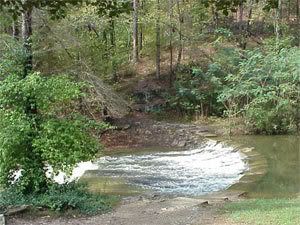 You've probably heard the saying: "Denial - it's not a river in Egypt." That's true. But if it were, it would eventually flood and move past its banks causing a great deal of damage or loss. It will put so much pressure on poorly built levees that they will eventually crumble, leaving a trail of destruction that can cause as much - or more - harm than the actual swollen waterway. Denial is deadly. It solves nothing and often exacerbates already difficult issues or circumstances because they go unchecked, untended, or unresolved.
It's easy to understand why denial is the "drug of choice" for abuse survivors. Abuse is ugly. It is often filled with shame, secrets, terror, danger, and pain. If you remain in denial, then you don't have to deal with a shattered family, broken relationships, or the difficult questions about why people didn't protect you or how they could do these things to you. The problem is that even though you don't acknowledge the problem, the problem is still there - festering, bulging, and pushing through your weak levee of denial.
At the time of your abuse and all the trauma associated with it - denial may have served as a buffer between your ability to function and the complicated trauma of abuse. The problem with denial of HOW these experiences impacted you THEN - and impact you NOW - is the pressure-building that goes unchecked. All of the energy that could be used draining that pressure is instead used to metaphorically hang paper murals that are painted to look like a solid steel and concrete dam. It’s a façade.
One of the great challenges in breaking through denial is the confusion between acknowledging reality and telling the world.
- Acknowledging reality can be as quiet and simple as writing in a journal without self-editing or self-restraint.
- Telling the world, on the other hand - can create a firestorm for which you may or may not be prepared.
- Acknowledging reality may require you to take a good hard look in the mirror, rolling up your sleeves, and getting to work to reclaim your life.
- Telling the world, on the other hand can create a sense of exposure that may not be constructive or good for you.
- Acknowledging reality may involve seeking the help of trusted, wise, and competent counsel.
- Telling the world, on the other hand, can give the wrong impression that everyone is invited to give their input and direction.
Denial will take an enormous toll on your health - physical, emotional, mental, and spiritual. It will cause pressure to build, but because you're in denial - all of that toxic energy will probably be spent destroying the people who really do love you, living beneath your potential, perfecting your bark without sharpening your bite, and living in complete captivity rather than in complete freedom.
Rather than contributing to the pressure that will eventually burst the levee of denial, how much better would it be to gradually drain off this pressure in a controlled and responsible way? This is done by acknowledging truth – what you know. The first one who needs to acknowledge your truth is YOU, but you aren't the only one who needs to know. Abuse recovery is rarely accomplished by yourself. Denial is rarely dismembered alone. You will need support, wisdom, and guidance from other sources. God. A trusted friend. A skilled therapist. A good book. Any of these will be important structural components to manage the weight behind whatever truths you've been trying to deny.
Denial is an inadequate attempt to contain the difficult issues from abuse. We saw the results of inadequate levees after Hurricane Katrina. The strongest levee you can build to find personal empowerment, spiritual freedom, and the path to move beyond abuse involves truth, not denial.
Wednesday, June 16, 2010
Abuse Recovery Tip for the Day
Take a ten minute walk or ride. For each of those minutes, intentionally look, listen, touch, or smell one new thing that brings you joy - such as the sight of an elderly couple holding hands, the sound of a passing train, the refreshment of cool water on your hands, or the smell of a fragrant flower.
Tuesday, June 15, 2010
Just a Reminder
The possibilities are numerous when we decide to act and not react.
-George Bernard Shaw
-George Bernard Shaw
Subscribe to:
Posts (Atom)