Thursday, February 25, 2010

Lent and Abuse Recovery


Lent is a Christian observance consisting of forty days leading up to Easter, the celebration of Christ’s resurrection. This is a profoundly important season for some people and one of complete irrelevance for others, depending on your spiritual practices and beliefs. The discussion of how Lent is observed is not the focus here. The focus is on how you can incorporate some of the practices associated with Lent into your abuse recovery.

Generally speaking, three things accompany the observance of Lent: sacrifice, prayer, and charity. Here are some suggestions to consider incorporating in your life between now and Easter that have the potential to facilitate greater healing for you. Regardless of your spiritual practices or faith traditions, these suggestions can accompany you on your personal journey to bring comfort and purpose to your recovery process.

Sacrifice
Consider sacrificing your practice of negative and degrading self-talk. What would happen if you abstained from talking to yourself in condemning and demeaning ways for forty days? What would happen if you sacrificed your habits of tearing yourself down, of speaking with disrespect to yourself and your worth until Easter? Negative self-talk may be much harder to give up than chocolate cake or beer! This is a sacrifice of long-toxic habits.

Prayer
Consider spending five minutes a day (or more) in quiet reflection and meditation. Sit in silence, release your spirit to seek God’s peace, love, wisdom, and direction. Open your heart and mind up as a receptor. Don’t ask. Don’t talk. Receive, connect, and drink deeply from God’s unconditional acceptance of you.

Charity
Look beyond yourself to those in need around you. Speak kindly to your family (yes, even THAT member of your family like your partner or your child!), your friends, and your colleagues. Call a minimum wage fast food worker by his or her name and thank them for serving you. Leave a tip for the maid who cleaned your hotel room. Donate food to feed hungry people, open the door for a young punk who is behind you at the convenience store or burger joint and say “Please, go ahead!” Look people in the eyes and smile. Prepare a meal for a single parent and bring it to their family.

Observance
Abstinence of negative self-talk, quiet meditation with God, and looking beyond yourself can bring a connection to the observance of Lent into your abuse recovery. Who knows, if you try this for forty days, maybe you’ll continue it for forty more!

Thursday, February 18, 2010

The Power of Empowerment


I'll never forget the terrifying experience of walking through my own home a few years ago and smelling a fragrance from a trauma that was over forty-five years old. I was home alone. It was terrifying because it was not possible. There was no way - under any circumstances - that THAT particular smell could be in my home, and yet it was there. I tore through everything in the bathroom, in the hallway, in the living room - trying to find out where it was coming from, but I was looking in the wrong places. I was looking OUTSIDE of myself, not inside.

A situation the day before had awakened a very old fear from my abuse. I was slowly processing the circumstances, using my tools - the tools I teach and help others to use every day - and using my voice to talk to the support people in my life. I was filled with anxiety and dread that morning. I hadn't slept the night before. This situation had become like a runaway train - heavy and out-of-control. Without going into any detail, the developments from the day before were going to explode later that afternoon - I had been warned about that - warned about that the day before. A phone call was coming that - in my mind - placed me back in the position of being a vulnerable, exposed, small child.

With every resource at my disposal, with every tool I teach and with every support person I could find, I frantically tried to unravel the knot this impending situation created in me. I thought I was coming to terms with it until that fragrance filled my home. It stuck to the roof of my mouth and turned my stomach. I knew it well. It might as well have been a ninja that slammed me up against the wall!

I quickly left and as soon as I got in my car, that same smell filled it, too. I couldn't believe it! Where ever I was, it was there. I called a friend who asked me one simple question that changed everything. "Well . . . what are you going to do about it?"

Whoa! It was like a bucket of ice water shocked me back to consciousness! I thought about that question - about what it MEANT and about what it IMPLIED. It MEANT that somewhere within me - within my own spiritual and reasoning resources - I could address the impending situation like an adult - not like a naked, terrified child. It IMPLIED that I was EMPOWERED to determine how to proceed, next.

I stammered a bit and replied, "I'm going to act first! I'm NOT going to wait for the threat; I'm going to make the first move on MY terms and MY schedule!" The minute - and I mean THE minute - I made the decision to address this impending situation - the smell vanished. Poof! Gone! I couldn't believe it!

I'm sure you could tell similar stories about something from that past that is so large and so threatening, that it pushes you back into that role of being vulnerable and small, helpless and exposed. As soon as I determined to take ownership of myself - of my choices and my boundaries - that ominous smell disappeared. Now believe me - I understand that there was NO SMELL - it was just that rotting terror of my childhood trying to rip off one more day of my life.

There is POWER IN CHOOSING EMPOWERMENT. The moment you firmly plant yourself in the here-and-now, then you declare your RIGHT TO BE, your RIGHT TO THINK FOR YOURSELF, and your RIGHT TO BE VALID. You step away from the role of a victimized child and step into the role of VIABLE BEING. This is not to say that you'll never be hurt again or that you have some kind of super-hero powers - but it IS to say that THE VERY ACT OF TURNING TO FACE THAT WHICH DIMINISHES YOU, AT ONCE EMPOWERS YOU!

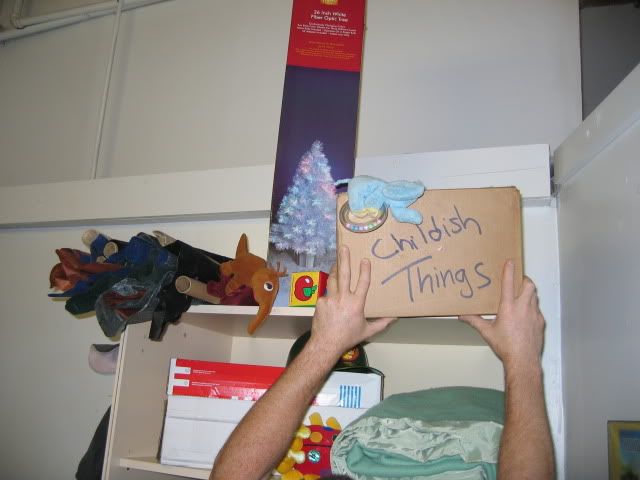
Abuse can convince you that you'll always be small, vulnerable, exposed, and afraid. Those are lies. Moving beyond abuse means facing life in the present, here-and-now. It means that you exchange the lies for the truth and put away childish things - including childhood terror. 1 Corinthians 13:11 (my paraphrase) applies here: "When I was [an abused] child, I talked like [an abused] child, I thought like [an abused] child, I reasoned like [an abused]. When I became an adult, I put childish ways behind me."

Each time you face your circumstances in a reasonable, responsible, and mature way - accessing help, support, and resources - you have put away childish things. That's the power of empowerment!

Thursday, February 11, 2010

The Gates of Hell


I'm certain that I am not the only abuse survivor who feels as if the gates of hell were opened the moment that abuse took place. I don't want to come across as spooky and I assure you that I am NOT a demon hunter. I don't look for satanic causes to every bad experience or hardship or illness. I work hard to remain balanced and lean on reason as well as God. For example, if I am sick with a cold, the reason is because I probably didn't wash my hands or someone else with a cold sneezed in my direction. My first thought is not about a satanic attack, but more about fluids, bed rest, and vitamin C. I know there are people who might argue with me on this, but I don't live thinking I'm being stalked by Satan every time I sneeze.

However, I have had seasons in my life when catching a cold is literally the tipping point that sends me hurling through absolute darkness. Those times when the cold, stacked up on top of the basement flooding, stacked up on a fight with my husband, stacked up on top of my computer crashing, stacked up on top of my child's broken ankle from a fall at school, stacked up on top of my office being broken into, stacked up on top of my dog dying, stacked up on top of . . . well, you get what I mean. It's during THOSE seasons that it feels much darker than just a cold. It begins to feel as if a target has been painted on your back and you're eventually full of arrows.

I think it is foolish to ignore the kingdom of darkness. To underestimate it OR overestimate it is also a big mistake, in my opinion. I think the balance of living as a spiritual being in a physical world means that we RECOGNIZE dark things for what they are and seek strength and comfort in appropriate ways during those dark seasons. There is a passage in the Bible (Ephesians 6:12) that states, “For our struggle is not against flesh and blood, but against the rulers, against the authorities, against the powers of this dark world and against the spiritual forces of evil in the heavenly realms."

The experience of abuse - any kind of abuse - creates an affinity between the victim and dark things. Sexual abuse, in particular, seems to open your spirit up to those spiritual forces of evil that the scriptures refer to. Abuse creates a rift between your Creator and your soul. It yanks loose the connection to God that would have strengthened and comforted you. It lets raw sewage seep into your spiritual foundation. It puts distorted lenses into your glasses so that your perspective is skewed. It emboldens self-hatred and self-destruction to such an extent that love is destroyed, relationships are dysfunctional, and the clean, crisp air of God's Spirit is lost to rancid pollution.

I've been working in the spiritual dimension of sexual abuse recovery for almost twenty years now. I'm convinced I could write a horror story that would make Stephen King blush, based on my own experiences and the thousands of other stories I've heard over the years. If you're an abuse survivor, I know right now you can look back over your life and identify experience after experience that was just so over-the-top insane that it defied logic. I believe this is as much an aftermath of abuse as the physical, emotional, and psychological damage is.

So, is that just the way it is? Do you and I sigh, shake our heads, and think, we've been marked or cursed and there's nothing that can be done? Well, to that I say not only NO, but HELL NO! Yes, abuse opens a very dark portal. Yes, it seems that many of us have experienced more than our fair share of catastrophes. But I think if you look at the ultimate destination of where that darkness can take you - here and now - you'll see that it can plunge you into hopelessness, depressive despair, and a severed relationship with God. I've always believed that was the primary goal - the big picture goal - of abuse.

I believe abuse is much more than it appears to be. As vicious and unfair as the physical, sexual, mental, and emotional damage is because of abuse, the spiritual damage is profound and not to be ignored. For most of my adult life, I've been struggling with God, searching with a seeker's heart, listening and watching, waiting and wanting more than darkness.

You may feel as if the soles of your feet are charred because you've been walking through hell for so long. I understand that. I also understand that we are to be people of light - people who see things clearly, who understand the bigger picture. After all, if you've experienced the worst, then you know there's got to be something better - otherwise, you would settle for the worst and you wouldn't be here, reading this, seeking your own way out of the darkness.

I want to leave you with some proactive steps that I believe we are to take as we encounter those dark seasons. I hope you use these as a springboard to determine what empowering steps you need to take to reclaim your life.

  • Look for patterns. Step away from the chaos of your circumstances for just a moment - as if you climbed up on a ladder looking down - and see if you recognize a sequence. Sickness - finances - work - family - relationships - fear - depressions. What are the patterns you see? Are they patterns of your making or not? (For example, if you keep over drafting because you forget to keep accurate bank records, the pattern is your making.) If you notice a pattern, then you have a larger clue as to what you're actually dealing with.
  • What do these patterns evoke in you? Take some time to think about where you will ultimately end up if the impact of these patterns runs its usual course. Does it evoke self-sabotage, rage, the re-awakening of a long dormant addiction or habit, a walking away from God? Take the time to examine what is evoked in you. Again - that will give you a clearer idea of what is really going on.
  • What part are you playing in this dark season? Are you feeding the dark things or nurturing the light?
  • Are other people influencing you in dark ways or in light ways?
  • Ask God to open your spiritual eyes - to help you see what is a consequence of living in the natural world where the laws of nature work predictably - and to help you see what are the workings of dark things over you and those you love.
  • Take meaningful action to address spiritual darkness in spiritual ways. If you need to, seek out people who might understand the conflicts between light and dark, and ask them to help you through prayer and spiritual empowerment.
  • Clean your environment. If you feel that something in your home or work or place of worship is attached to the dark season in your life, then it has already affected you as so. I don't think it's at all foolish to take action if it empowers you. Cleaning, re-arranging, anointing with oil, burning sage, purging your environment of disturbing things - these are all actions that can alter how you approach dark seasons.
  • Dig in. If I've learned one thing in my lifetime, it is that storms pass - seasons change. If you recognize the patterns of a dark season, then you already know what you're dealing with. Hang on because things could get very, very bad - and then go from bad to worse. One of my favorite scriptures follows the one I cited earlier. This one states: "Therefore put on the full armor of God, so that when the day of evil comes, you may be able to stand your ground, and after you have done everything, to stand. Stand firm then." Ephesians 6:13.

And yes . . . I'm in a dark season right now. Pray for me, for Committed to Freedom, as we pray for you. But to quote the President of the United States in the movie Independence Day when confronted by the evil, locust-eating aliens, I say: "We will not go quietly into the night!" After all, you and I are much smarter and wiser than locust-eating aliens!

Thursday, February 4, 2010

Running on Empty


In our family, we have many stories that have become part of our family-lore. One such story took place when our children were young and we were on a family vacation around Christmas time. It was 2 am, we were driving from Arkansas to Colorado, and somewhere in Oklahoma (where the actual temperature was -5) I noticed the gas gauge sitting on "E." I pointed this out to my husband*, who assured me that we had enough gas and could make it to the next gas station (he said this as a gas station was being passed on the right). Well . . . you guessed it . . . we didn't make it. There we sat on the interstate, only God knows what the wind-chill was with the legendary Oklahoma wind. My poor husband had to get out and find gas. The kids and I (and our cocker spaniel puppy) huddled together in our minivan for a long time, waiting for help. For the rest of our vacation, at every restaurant and stop, we would ask people, "What does 'E' stand for on a gas gauge?" 100% of the respondents said "Empty!" My husband, however, insisted that it stood for "Enough." We even came up with a family salute, holding three fingers sideways to look like the letter "E" to add further dramatic effect with the retelling of our family lore.

Abuse survivors have a way of looking at things that may be completely intolerable and think, "I'm okay." Now, don't get me wrong . . . I'm a firm believer in tenacity, hard work, endurance, and digging in, but there may be times when it is very appropriate to say, "I'm running on empty," and get some help before you become incapacitated. In fact, the obvious time to acknowledge this is BEFORE it's too late. That may require some honest assessment of your life circumstances and what kinds of available resources you need if you’re going to make it.

I'm a big fan of looking at patterns. If you see a familiar pattern, then you already have a pretty good sense of what's going to happen next. If you're in a relationship that is dysfunctional or even toxic, and it's been going on for awhile, there are no surprises. You know the rules and know how almost every situation is going to play out. If you have an addiction, you know your patterns - how you get trapped, where, and with whom. No surprises, just patterns. If you struggle with money or depression or bitterness, you can most likely see the familiar peaks and valleys that usually lead to a melt-down.

Ending up on the SIDE of the road instead of ON the road is a very real possibility if you stubbornly ignore familiar patterns. Albert Einstein defined insanity as: "Doing the same thing over and over again and expecting different results." To look at the patterns, to see the signs, to hear the concerns and cautions from your family, friends, and colleagues and ignore them is the equivalent of running on EMPTY and thinking you have ENOUGH.

One major obstacle to acknowledging you've hit your limit is that it feels as if you're once again small, powerless and in danger of being discarded or unwanted - just like you did when abuse occurred. While your current situations may be completely overwhelming to you, to ignore that reality and fail to come up with other options may exaggerate just how bad things are. It's like pretending that the gas tank is full when it is actually empty. Pretending it's full doesn't make it so. Eventually, you may put yourself in a situation where you actually are small, powerless, and disposable.

Many abuse survivors have been running on fumes most of their lives. That can make for a cataclysmic problem when things reach a tipping point for you - that one, last, crushing circumstance that pulls you over. If you've already come to a complete stop, use this time to re-group and re-think about how you are functioning and what needs to change. Use that metaphoric walk to the gas station (and yes, it will be cold, lonely, dark, and miserable) to strategically plan how you will manage yourself, your relationships, and your realities. If you're still coasting on fumes, make a decision to refuel now! It isn't an indictment against your capabilities, intelligence, or value - it's an acknowledgment that everyone needs to find resources outside of themselves if they're going to be healthy and functional in life.

Everyone has limits - highly competent and energetic people have limits, inept and sluggish people have limits. It is what it is. There are important moments in your journey where you absolutely must recognize your limitations or you will be in very real danger of burning out or shutting down. What steps do you need to take to replenish your mind, soul, body, and relationships? What changes need to happen? What needs to remain the same? What resources do you need to activate to stay or become healthier? How that works for you is something you will need to seriously pray and think about.

*Sorry sweetie, I’m not picking on you! You’re awesome!

Thursday, January 21, 2010

Acknowledging the Depression Monster

Let me say at the onset that depression is a serious condition that needs immediate attention. I completely support the use of anti-depressants to better manage the symptoms of depression. I completely support the use of medications to better manage the symptoms of depression. I also completely support exercise, healthy diet, stress management, and contemplative prayer. Depression is physical AND emotional AND spiritual - and all sides of that equation need to be tended to. It is complex and may require the attentive care of qualified professionals, including a mental health therapist and a physician.

For more information about depression, go to the National Institute of Mental Health website:
http://www.nimh.nih.gov/health/publications/depression/complete-index.shtml

I want to address the energy behind depression - behind depressive symptoms. Traumatic experiences, such as childhood sexual abuse or sudden loss, bring you face to face with the terrible reality that the world is not safe . . . that the world is not good. You may remember the moment you experienced that reality - you may not. Some people recognize this gradually by simply living life, but trauma plunges you into that realization with little-to-no preparation and very few tools to work through it.

Faced with the shocking realization that the world is not safe and not good, people have to find ways to cope. That can lead you to create elaborate and irrational beliefs and habits to push the shock away. Unfortunately, this is usually manifested in self-sabotage at best, and complete despair at worst. As the cyclical trauma/self-sabotage/despair perpetuates itself, it gathers momentum (and years), and becomes the perfect storm for depression.

It's almost like a self-fulfilling prophecy. You experience trauma and become immersed in a world of terror, powerlessness, and vulnerability. The stage is set for you to expect that kind of world, particularly if you were the victim of chronic abuse or neglect. At some level, you not only are the victim of trauma, but also a victim of your irrational beliefs and behaviors that are formed to push the experience of trauma away.

Of course, those experiences have a way of pushing back and you find yourself facing not only the reality of what WAS - but also facing the tremendous disappointment of what HAS BECOME. You lose hope because the trap of trauma and irrational living seems to overtake and overpower you. Essentially, you lose heart. You can't find the energy or drive to function. You struggle to answer the question, "Is it worth it?" with any response other than, "Not really." You get so beat down by what WAS and what IS that you have no reserve to draw from. It's the epic struggle for power and control gone terribly, destructively wrong.

In a perfect world, you have adequate funds and resources for appropriate help. Of course, that's not the experience of many abuse survivors who struggle with depression. In fact, you may be suffering not only from depression, but from the inability to find or pay for the help you need. This is when - even if you don't feel like it - you must find an interior point-of-reference in order to better manage depression. Depression - even when you're on medication - can obstruct your view of that inner strength point-of-reference, so it's important to begin with a simple success and build on it. Even if you do have appropriate care and medications, you must still find the tools to draw upon your inner strength.

Your greatest strength is ENDURANCE. You have proven that because you're here! Depression distorts how you see yourself, particularly when you've been abused. Even the smallest re-adjustment of your self-image could make a huge difference in how you manage depression. So think about that - YOUR GREATEST STRENGTH IS YOUR ENDURANCE OR YOU WOULDN'T BE HERE!

Another great strength you have is your TENACITY to press forward. Again, if you didn't have tenacity, you wouldn't be here and you certainly wouldn't be reading this article! The fact that you've sought help - that you're reading this article - clearly demonstrates that you are like a pit-bull who will not let go until you find what you need.

A substantial question to ask yourself if you struggle with depression is, "What strength has gotten me this far?" I'm talking about STRENGTHS - not the band aide like drinking or spending or hiding or other self-sabotaging habits - what STRENGTH has gotten you this far? Look for that strength - capitalize on it. Put it in the center of your thinking and focus. Use the STRENGTHS that you have identified (like endurance and tenacity for starters) to build on. Perhaps one strength you can build on is your relationship with God – or perhaps not. For many abuse survivors - even the relationship with God seems to be peppered with disappointment and disillusionment.

An important tool to manage the spiritual component of depression is to tell God how you feel about your connection to him. Finding an ally in God is possible only when that connection is built on honesty - so if you're comforted by God - tell him. If you struggle with God - tell him. Either way, you're not taking God by surprise, but you are building your interior resources.

I recognize that life - by and large - is a pretty disappointing experience. Trauma certainly cements that reality into your soul, but so does the day-to-day struggle to function that so many of us know. You can't talk yourself out of depression with optimistic drivel, but you can take a breath and acknowledge that life has been very unfair. With that acknowledgement also comes the recognition that you have tremendous strength or you wouldn't have made it this far.

Read up on depression and how to help yourself through proper food, rest, and stress management. Change what you can. Stay away from depressing entertainment. Use what little energy you have wisely. Recognize your strengths and slowly build on them. Do things that will nurture a healthier worldview to anchor you into what could become an ally. Think strategically to identify not only WHAT you can do to help yourself, but HOW.


This is the third in a three part series on Acknowledging the Monsters.

Thursday, January 14, 2010

Acknowledging the Rage Monster

There have been many fine books and articles written about anger management, so this is not my feeble attempt to re-invent the wheel. What I want to focus on is your acknowledgement of what the Rage Monster really is. I recognize that every abuse survivor struggles with unique issues in different ways, but rage is a universal issue when abuse is experienced.

I can hear some of you challenging that assertion. "You're wrong, I have a very long-fuse" or "I never, ever lose my temper with anyone." But I'd like to peel that back a bit more to help you understand that rage doesn't always manifest itself with a fist through the wall or a glass hurled across the room. Some people don't have a ripple on their pond while others produce surf-worthy waves, but rage is more than outward anger. It is the deep, unsettled sense that someone has to pay for what was done to you. Please understand that may not even be a conscious thought for you, but it is there and it is powerful.

Rage is the offspring of lost power and control. To experience abuse or trauma of any kind brings every human being to the terrifying reality that they do not have enough power and control to protect themselves or to prevent trauma. When you are confronted with that reality - even as a child - it sets off a torrent of panic and unleashes an obsessed vigilante who is bent on punishing wrongs and vindicating injustice. It sets everyone on a course of power-gathering, but it is important to note that HOW that power is gathered varies from person to person.

Some of us bulk up - physically, financially, professionally, academically, and relationally. The thinking is that the better or more you have - be it people or beauty or money or drugs or food - the more powerful you are. You work hard to push that sense of being overpowered and exploited behind all that you have and are. No one ever sees the terrified child cowering in the corner when you're beautiful or rich or smart or high.

Some of us are explosive - perhaps even dangerous and abusive, too. If you threaten to verbally annihilate or physically destroy anyone who crosses you - then no one will ever suspect that you once were so small and weak that you couldn't protect yourself and couldn't stop it.

Some of us pull inward at the slightest hint of risk-taking. You don't risk expressing your real thoughts or feelings. You don't risk making a move or making a change. You never rock the boat. You work yourself into the ground accommodating the demands and needs of others, putting them above your own to the point of exhaustion. Your silence and compliance are highly effective cover ups for the perpetual screams that were never heard when you were being abused - that no one ever intervened to stop.

The Rage Monster is the out-of-balance demander of justice. The judge, jury, and executioner who lives to catch and punish. Some of you live to catch and punish others - even those who may have nothing to do with the abuse and trauma you experienced. Others catch and punish yourself for being weak, less-than, and unwanted.

Acknowledging the Rage Monster means you also acknowledge the brutal truth that you were helpless, vulnerable, small, and weak. It also means you acknowledge that others failed, exploited, overpowered, and hurt you. The issue of justice which underpins the Rage Monster must be acknowledged, as well. There will never be enough punishment - either on others or on yourself - to right the wrongs you have suffered. No matter how strong or beautiful or accomplished or scary or self-destructive or invisible you are - it will never be enough to change what happened.

The Rage Monster can only be tamed - can only be better managed - when you release the issues of justice from your personal control. Even if you have a $1 million settlement check or your abuser is rotting in a dark prison somewhere – it will never be enough for you if you live your life as a vigilante. As a person of faith, I'd like to submit that we have SOMEONE to release the issues of justice to - God. If you aren't a person of faith - there is still a releasing that can be quite helpful in setting your mind and heart free from the Rage Monster.

The Rage Monster is diminished when that which we have clenched in our fists is released - when you embrace yourself as a vulnerable and needy creature who has been hurt and will most likely be hurt again. The Rage Monster is a liar. There is no way to live in a fortress of rage - expressed outwardly or inwardly - and not be further harmed. In many ways, living life in that way makes you more vulnerable and weak than you might think. It is when we take risks, when we learn healthy boundaries and practice discernment, that the fuel of the Rage Monster dries up. We will no longer believe if we just have enough power and control, we'll silence the past. The past is the past. The amount of power I permit that past to have over how I live today is truly where taming the Rage Monster begins.

This is the second in a three part series on Acknowledging the Monsters.

Thursday, January 7, 2010

Acknowledging the Sexual Monster

It's a difficult thing to look at yourself honestly, but in my own journey beyond abuse, change has rarely come unless I honestly acknowledged the monsters (or issues) within me. For most abuse survivors, there are generally three monsters that need to be acknowledged and tamed:

(1) The sexual monster, (2) The rage monster, and (3) The depression monster.

Yes, there are an abundance of other issues you may struggle with, but you'll probably discover they are spin-offs of one of these three. In fact, even depression can be another spin-off of rage - not always, but sometimes. Over the next few weeks, I'd like to explore each of these monsters and what they mean to your journey beyond abuse.

The Sexual Monster is one that creates the greatest chaos, shame, and difficulty. If you experienced sexual abuse - especially as a child - your sexual teachers were abusive exploiters of your innocence, your vulnerability, and your curiosity. Your sexual experiences in the context of abuse - the sensations, the feelings of pleasure, power, terror, or pain - shaped how you learned to think about sex. Please note, I didn't say these experiences shaped how you learned ABOUT sex, but how you learned to THINK about sex. You “cut your sexual teeth,” so to speak, on twisted, inappropriate, and often traumatizing sexual experiences. While many abuse survivors have a great deal of sexual experience, most have very little understanding or factual information about sex - how your body works or how a partner's body works.

There was an interesting study done some time back with people who self-reported being very resistant or reluctant about sexual experiences. In this study, there was also a control group of people who self-reported that they enjoyed sex and felt balanced regarding sex. When physiological measures were used, the group that reported being repulsed by or resistant to sex were actually MORE aroused than those who said they didn't have problems with sex. What this tells me is that many of us who experienced sexual abuse are highly conflicted when it comes to sex. The internal dialogue goes something like this. "If I want sex or enjoy sex now . . . then that must mean that I wanted and enjoyed the abusive sex." That is a FALSE conclusion, but it is a powerful falsehood that creates the deep sexual conflict that many survivors suffer with.

One step toward having a healthier relationship with sex is to acknowledge that wanting and enjoying sex are NOT synonymous with wanting or enjoying abuse. The Sexual Monster is really a sexual lie. God made us to both desire and enjoy sex. The experiences of abuse skew that until it becomes a source of great turmoil, confusion, shame, and even perversion. If you don't acknowledge the Sexual Monster, then you probably aren't combating it with truth, factual information, and personal dignity. That could leave you either highly aroused for very disturbing reasons (such as seeing children or fantasizing about being raped), or could even lead you to act on that arousal and become a sexual predator or sexual victim.

Sex was meant as a gift from God to be celebrated, respected, and experienced responsibly. The Sexual Monster can either completely shut you down, sexually, or do just the opposite - create a new generation of predator, exploiter, or addict. Sex is a complicated issue for abuse survivors - believe me, I understand that. By the end of this year, we hope to have a guide to healthy sexuality put together and offered as a resource. Until then, think (and yes . . . even pray) about the Sexual Monster that may be robbing you of a healthy appreciation for who you are as a sexual being. Like any bully, when you turn and face that which has tried to conquer you - you often disarm its power over you and find that you are the one who can become empowered - to know truth and live in truth, even about your sexuality.


Next week, we'll look at the Rage Monster and the following week, we'll address the Depression Monster.